Prairie Light eBook Series

Friday, July 25, 2008

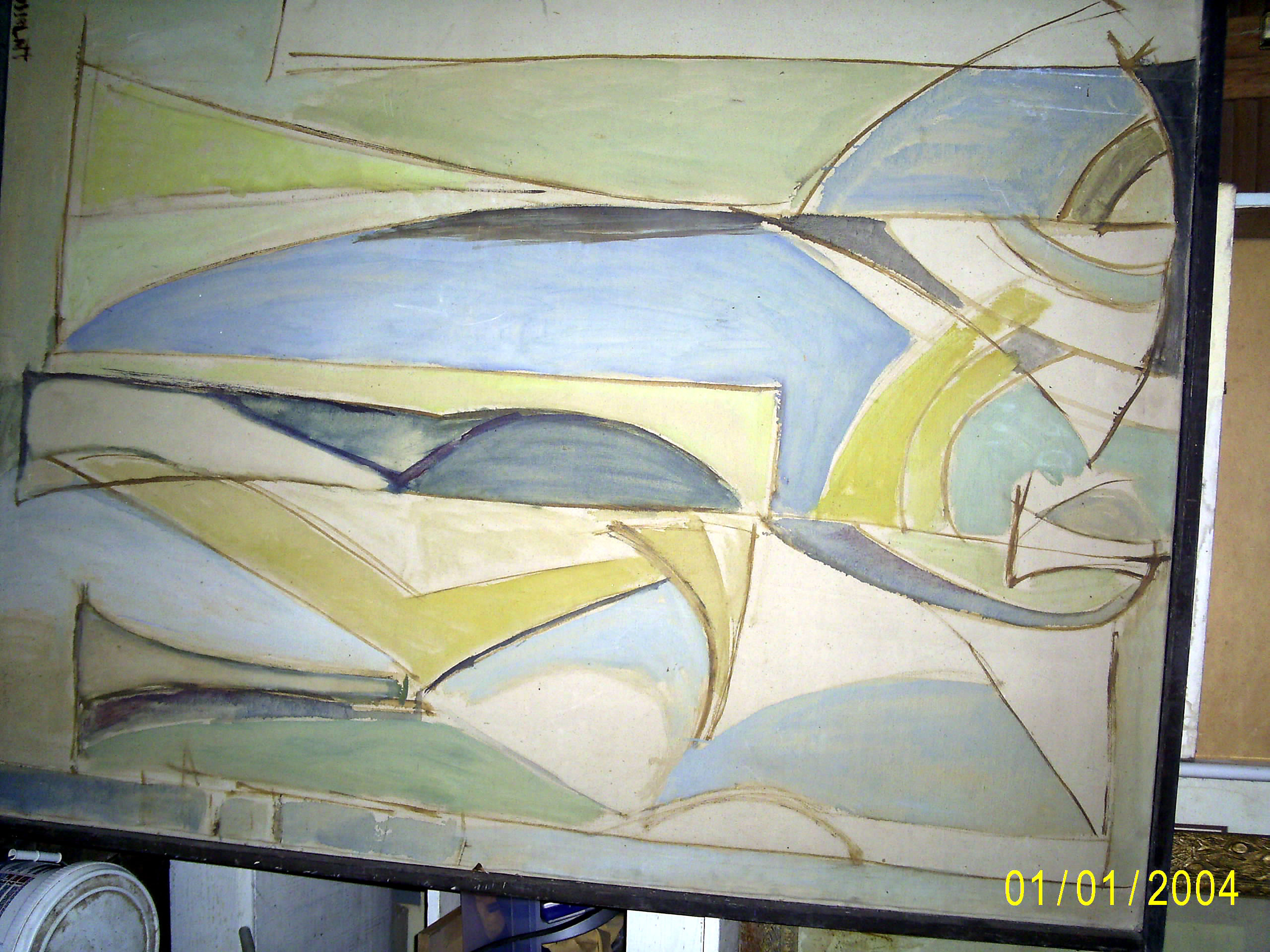
Another David Grossblatt Painting Discovered!

I received the following email and photographs from Kyle Johnson who has graciously allowed me to share them with you.

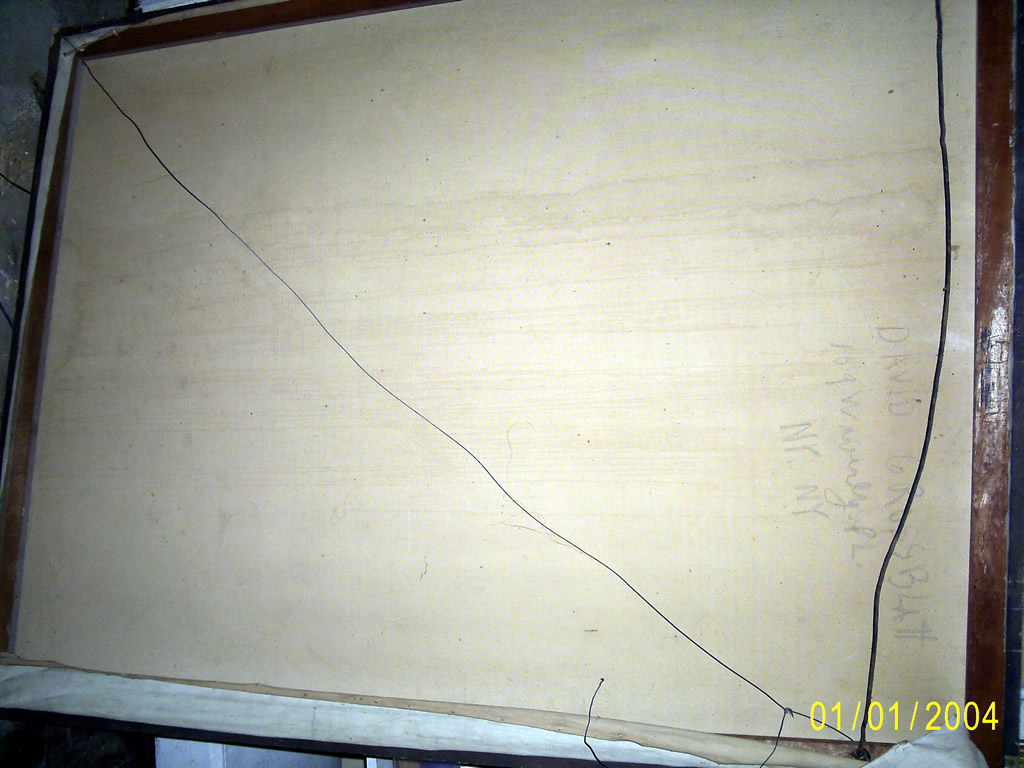
Hey, I'm Kyle. So I was searching google for David Grossblatt because I'm here in Washington, DC helping my great aunt clean out her house and in the basement I came across a large painting sort of hidden in the corner. So I took it out, looked at it and say Grossblatt signed on the front and on the back it read David Grossblatt NY, NY. So here I am, searching google when i see that you have a blog about him and some of his finds and I thought I'd let you know I found one. Story behind it goes my great uncle's friend knew David, who at the time was trying to go to Paris. Before Grossblatt left, he wished to have a typewriter, which my great uncle's friend traded to him for this painting. And somehow it was traded to my great uncle where it was placed on a wall for a while till the wall was painted. This is how it ended up in the basement to be forgotten until I came upon it. Attached is some photos that I took earlier this morning. Enjoy
Here are Kyle's photos:


For those of you just coming in on this discussion, David Grossblatt was the co-owner of the Cafe Rienzi in Greenwich Village and he held quite an influence in the abstract-expressionist art movement. I have been posting tidbits of history about the Cafe Rienzi because my Aunt and Uncle helped to start it. I remember my Uncle Tom Durant taking me to his art studio one day and teaching me about abstract paintings. He let me try my hand at one - I was about 8 years old. Just from that little memory, and looking at the painting, I think David Grossblatt was a big influence at that time.

JuneBug

One of these days I'll get around to posting some of Uncle Tom's paintings.

Friday, April 11, 2008

Heads Up for All You Firma Duchene Watchers!

Just thought I'd let you know that one of Aunt Firma's paintings sold on ebay for $350.00. Here's the link (for as long as ebay keeps it, anyway). And here's what the seller wrote about it:


  • Beautiful Southern Indiana Landscape by Indiana Artist "Aunt" Firma Duchane Phillips.


  • Oil on Canvas measures 36 x 24 inches - 42 x 30 overall in very good frame.


  • Painting is in excellent condition, very bright and vivid with excellent detail. No chipping or tears.

Sunday, March 16, 2008

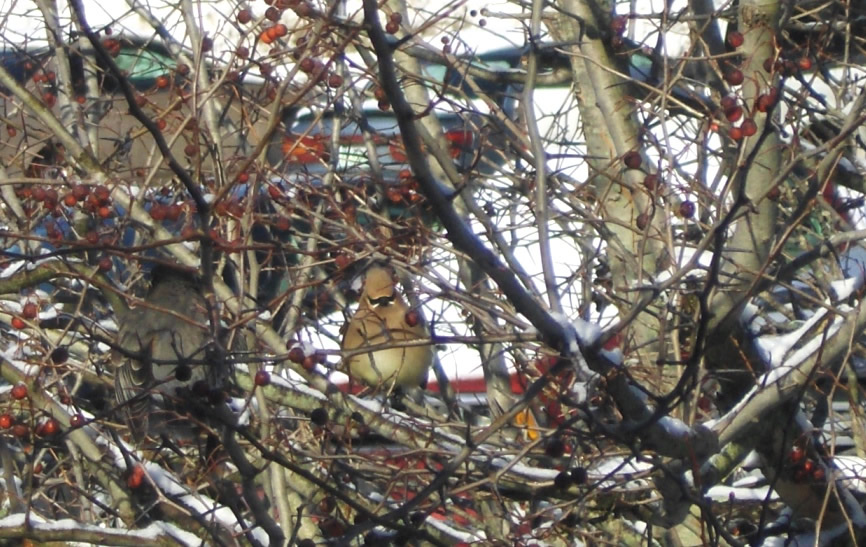
Cedar Waxwings and Robins

Just posting briefly to share some pix! Not great shots, but you can tell what the birds are. We had a tree full of cedar wax-wings and robins at work last week. And after just three days, all the berries on the tree were gone, and all the birds were gone. :)


The pictures were taken with an 8 megapixel HP camera, 3x optical zoom (not quite enough).


Little Masked Berry Bandit

Little Masked Berry Bandit

Profile of Cedar Waxwing Profile View of Cedar Waxwing

Robin and Waxwing

Waxwing and Robin

Heads up on SharePoint Services - A Great Online Collaborative Tool

Per the title of this post, probably something many of you already know, but here's my story.

I currently work for two not-for-profits as a compliance specialist. With all the regulations surrounding grants and contracts, social services people have a boatload of information to keep track of. So we started off by tackling reporting - and I modeled a report tickler system in Outlook that went a long way toward gathering all the information we needed in one place and helping us meet our compliance goal of getting reports in timely. However, I remained convinced that a truly collaborative online work environment was what we needed.

By October 2007, I had been given charge and custody of a product called SharePoint Portal Server by my boss and the IT director. As I looked it over, I recognized the potential SharePoint Services held for giving our agency an intranet and a truly collaborative workspace for report writing, grant writing, and other endeavors. Best of all it was intuitively accessible through our web browser. But first it took a thoughtful observation from a co-worker to get the ball rolling.

One day a co-worker made a thoughtful comment about something I'd already started to realize and try to simplify during the formative evaluation stage of the Outlook Tickler System, namely that receiving all those information-laden tickler emails could feel overwhelming - particularly during a heavy reporting cycle - which for us came quarterly, semi-annually, and annually. During those times, we could have as many as 22 reports going out to funders in the space of a single month and involve 25 to 30 staff members from the different programs in the process. Since over half the reports had a financial component as well, business office staff might find themselves responsible for getting out 15 reports in a month's time after running monthly financials. With a tickler email going out for each stage of our compliance strategy, the business office person could receive potentially receive 60 emails in a month's time. At that rate, even with everything embedded in one email or Calendar entry for a particular report, it was still difficult to get a handle on what was due when, and where to find it.

"I know," I responded. Then, "But at this point I don't know how to fix it."

"I know you don't," she replied patiently - as if, "Who would?"

We left it at that, but that brief exchange started the wheels turning in the back of my head.

... I wonder if there's a way ...

As I've already stated, around that time, the IT Director came to me with a manual and a CD on SharePoint Services. As I looked it over, it dawned on me. Instead of a tickler email for each report, there would be a tickler email for each person - and the email would simply contain the due dates and a link to a worksite for each report. The link would be accessible through the person's web browser. There would still be a tickler email for each stage, but an individual would receive only four tickler emails at the most during a month's time. The report worksite would contain all the resources previously embedded in the tickler emails and calendar entries. . . report instructions, contact information, report formats, report procedures, previous period reports, and funder reporting schedules. Best of all, the worksite would be interactive. No more passing documents back and forth via email. We could all literally be ON THE SAME PAGE. There would still be a calendar but it would be primarily for me, to remind me to get the ball rolling. The calendar content would be much reduced, containing for the most part just the link to the worksite.

On the eve of one of our busy reporting cycles, I spent an intense week learning SharePoint and constructing worksites - which delayed send-off of the Stage One ticklers about a week. Generally, I prefer a piloting or phased implementation plan as opposed to quitting "Cold Turkey." But in this case I went with a gut feeling. While the Outlook-based tickler system had helped us achieve our goal of timely reporting, most of my report writers were still resorting to email as a main resource for finding and relaying what they needed- simply because using Outlook's public folder didn't seem to be catching on. So, relying on their knowledge of the web, I emailed each person a brief (and enthusiastic) STAGE ONE tickler email. It contained a list of their reports due with the links to the worksites, the compliance strategy due dates, and who currently "had the ball." I invited people to try out the links and to contact me with any questions. To make a long story short, the SharePoint Services worksites have been very favorably received to date. While SharePoint interactive worksites do have a singular look and feel, the fact that people were already quite used to finding information and interacting through their web browsers (as witnessed by the success of ebay, and blog sites) worked greatly in our favor.

From the Report Tickler System it has been but a hop, skip, and a jump for us to create worksites for other purposes as well and voila. Another intranet is born ... We still have a lot to learn about it - myself and the organization as a whole. Recently I was asked to do a presentation on SharePoint to get middle managers started thinking about the potential. Here's the link to the presentation and the notes. This is also available from my linked-in public profile and at slideshare.

Monday, March 03, 2008

Betty's Roses


We drove away and left Betty buried on a hill in Slaughters, KY on the first day of March with the promise of spring in the air, but the ground still bare and stark. I so much wanted to take pictures but I didn't dare be inappropriate or intrude on the family's grief. I took some outside pictures of the old Slaughters Christian Church where the funeral service was held. Actually I've often wanted to take pictures in Kentucky - Betty and Hal have such a lovely place. The surrounding countryside is so quaint and picturesque with its hills and "hollers" and back country roads that wind up steep hills through narrow tunnels made of trees. We'd often sit on the front porch of Hal's home place where he'd retired and built a new house after working as a professor from Purdue and enjoy just looking out at the fields and tree lined hills across the way, and watching the birds in the stately trees that lined the long driveway and admiring the flowers and the garden. Hal and Betty named their place Morning Song.

I guess those pictures will have to remain as pictures in my mind and in my heart to be painted with words and perhaps incorporated into my dreamscapes … Like the images from the day we put Betty to rest. Granddaughter Amber standing tall and slender on that hillside, the wind sifting through her long blond hair as she held a red rose from one of the graveside flower arrangements against her dark plaid winter coat, her slightly freckled face and grey blue eyes surveying the grave sites of her ancestors with perhaps a newfound interest in her roots. Her mother Becky standing along side explaining who was who. Becky with her short dark curly hair and mischievous brown eyes was the one everyone called "Grandma Bonnie" at the viewing because she so reminded anyone who had known Bonnie of her.

Paula holding a red rose against her neat black coat, the daughter who looked so much like Betty, today her straight black hair and intense brown eyes contrasting against the pale winter sky. She had stood watch with Jenny and Hal the last few days of Betty's life. Becky and Mark were in Pennsylvania with Amber and her husband.

Daughter-in-law Penny, son Brian’s wife, an engaging young woman and mother with brown eyes that dance, and their two small boys, Colden and Hal Robert (Beau), the youngest grandchildren, had gathered roses from the graveside flower arrangements and handed one to each of us. These added sparks of color to the brown and gray of winter as people scattered to visit gravesites of family long passed on.

The expression of grief that always seemed to return to youngest son Brian’s face in the inbetween moments of chasing after toddlers and joking with family and friends – he had made frequent trips back and forth from South Bend, Indiana these past few months and had been fighting off the same cold as Benny the last two weeks.

Jack's face, his eyes red from weeping – the oldest son and the first grandchild, who had come back and forth from South Carolina during the few months of Betty's illness - but still functioning with composure, humor, dignity, and grace. And Mary Ellen his tiny wife who was keeping her mother who was suffering from Alzheimers. I had worked with her mother many years ago at Duncan Meter. Jack and Mary Ellen had brought her along but left her at Hal and Betty’s with the lady who came to clean their house.

All the men standing in front the old Slaughters church, gleaming white in the sunlight as we drove up - Jack, Brian, Benny, Tootsie, Mark, all dressed in solemn dark suits, there to direct the parking and to fit all the cars in a place not accustomed to such an attendance.

Donald Qualls girlfriend's dirge, the only song of the service, sung acapella straight out of 19th century Appalachia.

The wonderful country dinner at the church afterwards. Pecan pies and apple dumplings and chocolate cakes and banana pudding – ham and fried chicken and slaw and cornbread, corn from the garden and green beans …

Brother Gary Ashby's message about the pages of Betty's life - those we all were in, those yet to be written - Brother Gary always has a unique perspective in his sermons.

Amber's husband Brock, a seminary student in Pittsburg, who at the last minute was invited to speak and gave a thoughtful reflection and explanation of a passage in Ecclesiastes - the one that says that it is better to be in the house of mourning than in the house of mirth - the kind of foolish mirth that detaches itself from life ... whereas the house of mourning is a sort of reality check that touches our hearts and allows us to become better people.

Watching Hal Ray stand solitary beside Betty's casket graciously greeting and welcoming the long receiving line of neighbors and cousins and friends at the viewing, some from close by, some who had traveled distance - perhaps the professor’s longest and saddest lecture. As people came in, he greeted us all by saying, "I'm hugging all the pretty women tonight," then told his friend Bob, "That includes you," and hugged him as well.

He told me he'd first seen Betty when he was in second grade. They were high school sweethearts, someone else commented they had probably never dated anybody else. Someone said he'd told them, "I had my eye on that girl for a long time."

The eulogies and tributes to Betty included, of course, her cooking – I believe it was Brother Gary who said, "That woman could take dirt and make it taste good."

She had welcomed me into her lovely home and accepted me and fed me well and hosted me so graciously so often over the last twenty-eight years - if it was an imposition, it never seemed like one. Betty was always ready and she made everything look easy.

Sister-in-law Betty Winstead rode down with Benny and me - her first trip to Kentucky to see the family after Paul died. Paul was the first, but not the oldest, of the Winstead siblings to go. Betty has gone through a long mourning period. She says she journals and is on her third journal of letters to Paul. She said in her very first letter she asked him, "Well, what's your baby brother Jerry Alvin like?" Jerry was born between Betty and Jenny but had only lived a few days. She said Paul often mentioned that he wondered what Jerry would have been like.

I remember Betty Roach when Paul died. Everyone met at our "new" old farmhouse. Betty and Hal changed in our study. We all stood in the receiving line with Betty Winstead. I remember Betty Roach standing by Hal, her trim and slender appearance in her "little black dress" and black pumps belying her 72 years, as she greeted folks from Dayton she probably hadn't seen in a while ... Hal told me last fall that they'd gotten married when she was seventeen and he eighteen, and in his mind, Betty was still seventeen.

And I remember sisters-in-law Betty and Jenni busily cleaning all the marks off my new glass top range.

I discovered that Paul's Betty wrote Betty Roach every week of her illness - she said she knew she could write but just couldn't trust herself to talk on the phone after losing Paul to the same illness in such a relatively short time. Betty Winstead kind of stayed away from the family for a while ... to get back on her feet I guess.

When we pulled into Jenny's on Friday afternoon, there she stood stirring a big pot of homemade soup and pressure-cooking some beef. Jenny told us she had had about three hours of sleep in three days. The hospice people had been telling them the end was near for a couple of weeks – a few hours, a day, perhaps through the night. Tuesday night they’d had to call them late to increase the pain medication. The hospice people told them then it would be a matter of hours. By then Hal Ray wanted someone by Betty's side holding her hand the whole time and wanted everyone to do it in shifts so they wouldn't wear out - he and Jenny and Paula were the ones who stood watch those last few days and Betty passed shortly after Brian arrived back down there.

The thoughtful and inclusive obituary obviously written with what Betty thought important in mind. No one was left out. No one. I think if Willie, their little dachshund had still been alive, he would have been listed too.

Betty lay in a hospital bed in the living room the last two weeks of her life and Jenny stood by her bedside practically the whole time.

It's been a rough winter all around - Kentucky has had two ice storms in the last three weeks. Tree branches were piled everywhere, barely clearing some of the narrow country roads. Betty and Hal were without power for four days - Betty too sick to go to a motel so they had to tough it out, Hal said. Jenny's son-in-law Mike brought them in a kerosene heater and whatever else they needed.

But perhaps I digress. Betty has been on my mind frequently for the last few weeks and she and her family will remain on it for some time to come. She passed 1:00 am on Thursday morning February 28, 2008. We got the call at 8:00 just as I was leaving for work. I went on in to work and did a few things and then turned around and came home - cleaned the house and got ready for the trip to Kentucky. The neat thing was that I'd been feeding birds outside my kitchen window this winter. A pesky cardinal and his mate were the ones who started it all - he kept attacking my kitchen window last spring so I put out food to distract him. But Friday I looked out and there were all kinds of birds including a tiny black-capped chickadee - oh, he was so cute. First one I've ever seen around these parts. Betty loved birds. I think I've always taken them as a sign - silly, but the rare visitor reminding me of Betty's spirit on the wing, free and spry once again.


Friday, December 21, 2007

On Romance with Age

Well, I've already written what my obstacle course is along the path to Romance - in a notebook, not on this blog. Yet. I've moved beyond it and I would like to quit reliving it. :) God only knows what my partner's ostacle course was, but if his childhood was anywhere as painful as mine, and it was, we'd barely have a chance in hell in the romance department. Those white hot sheets of blinding emotional pain layered on top of one another to the vulnerable who have no protection, getting at the core of who they are and destroying their confidence ... Because anytime something happens to remind me, it sends my Venus running for deep cover. In a way it's too bad our psychological scars and wounds aren't ... more obvious. If they were as evident and easy to see as a disfigurement or a missing limb, or blindness, or whatever, our fellow men would have a better shot at understanding us, and thereby sympathizing with us and knowing how to approach us.

Friday, October 12, 2007

Sterile Design Environments vs. Fertile Design Environments

When you've been at something as long as I have, and witnessed first hand the desktop revolution growing up from the first dos machine to the internet and world-wide web, you arrive at the point where you feel you can form some opinions about design. I have worked in the computing field in one way or another for twenty-five years, mostly designing solutions from the tools at hand.

I have worked in computer shops and it departments. Those were my sterile design environments. That's probably a misnomer. They were rich in access to technology, often the newest technology. They were rich in access to creative and capable colleagues in the IT field. But they were sterile in the sense that they were not intimately "wedded to" or "situated in" the areas they served. In a sense their knowledge and skills lived in a vacuum.

Then I have actually worked in jobs where I had to design tools for myself and for a whole group of people to solve a problem we were all grappling with. That kind of job is fertile in that your computer knowledge does not sit in a vacuum with nothing to do and you have inner access to the people and problems that you design solutions for. In fact part of the art of design is engaging users to design solutions along with you.

While the knowledge and skills from the first environment are essential, I think that designing in the second environment produces better products.

It makes sense in the light of modern learning theory which espouses "situated" learning and constructivism.

I have two degrees (well, three actually, but two technology and design related) - an associates degree in computer programming technology and a masters degree in educational technology. I think the two complement each other well. Both teach systems design. However, as I often say, educational technology fills in some gaps in systems design theory, especially when you are designing tools to scaffold people's cognition. And today, with the information boom, and the cognitive overload that inevitably results, those type of tools are more needed than ever. In fact, I think and predict that providing tools that help people effectively manage and use the amount of information that is available to us today and that is required today will be one of the greatest and growing requirements and fields of this new information age - right behind, if not alongside, the computer security field.

Traditionally systems or design theory teaches (sort of) that if you build it they will come. Modern learning theory and constructivism says instead, if they build it, they will use it. This is more than just change management and 'buy-in". Knowledge is socially constructed and negotiated - if something is to be used, it must go through some process of social knowledge construction. If something is designed in isolation, people won't even know it exists and they certainly won't use it. And we've all heard the horror stories about systems "passed down from on high."

Not that these were bad systems. They just neglected to go through an important part of the process.

Tools that scaffold cognition must provide an evironment and the tools for the user to construct and negotiate knowledge. Too often we want to say "out with the old and in with the new," in one fell swoop. This is a mistake.

Windows SharePoint Services provides the environment and tools to help employees manage information overload both in a "top down" and "bottom up" sort of way. Kudos to Microsoft - hey you guys do it right once in a while! ;)

More on this topic later.

JuneBug

Monday, September 10, 2007

Summer Hummers

Have to try out Blogger's new video upload feature, hee hee! This vidlet was taken inside from the window over my kitchen sink with my Olympus C5050 digital camera.

I have enjoyed feeding hummingbirds for many years and was surprised to host so many of the tiny visitors this year. Perhaps it was the drought and the ready availability of a refreshing drink that drew them in. They would drain my feeder dry in a day. At times I would even see four feeding simultaneously – a first that I tried hard to capture on camera but alas it was not to be. Hummingbirds don’t share their space easily, and one extremely territorial little guy soon started successfully taking on all comers.

I named him “Rambo.”

I tried various distractions on Rambo but nothing seemed to work. Finally I hung another feeder at the back of the house, behind the summer kitchen, on the clothesline post, well out of Rambo’s sight - so the other birds would at least have a chance of getting a sip.

About this time we were preparing to go on vacation to a family wedding in Kentucky and then on to Myrtle Beach to visit our daughter. Our friend Mark who rents our summer kitchen had agreed to bring in the mail and the paper and to take care of the dog and cat. Having gone vacationless for two or three years while we changed careers and dwellings, I guess I must have been manifesting some serious separation anxiety because Mark commented to a mutual friend that I would probably leave little reminders and notes for him all over the house. So the night before we left, Mark commented, “Guess what I saw outside my window this morning - a hummingbird feeder! Is that your reminder for me to feed the hummingbirds?”

Actually, I thought it was rather sweet. :)

(And true to character - lol! I had left hummingbird brew in the fridge, intending to tell him to refill the feeders. )


Hummingbird Wars

Watch him spread his little tail feathers when another enters his territory!
JuneBug

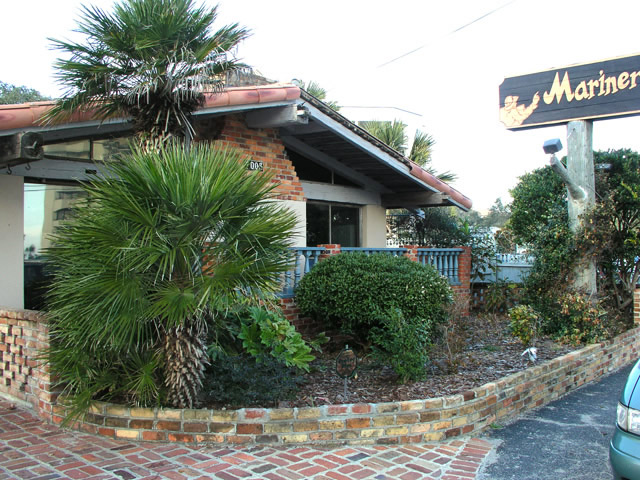
Remember the Mariner

In January 2005, thanks to a discovery by our daughter and her boyfriend who had moved to Myrtle Beach, my husband and our dog Hazel and I spent about 3 weeks in a charming little motel-type resort called The Mariner. Nestled amidst the high rises on Ocean Boulevard, the Mariner is only one short block from the ocean and easy public access to the beach. We could see the ocean from the front door of our first floor suite which also opened up on a lovely outdoor heated swimming pool.


The Mariner
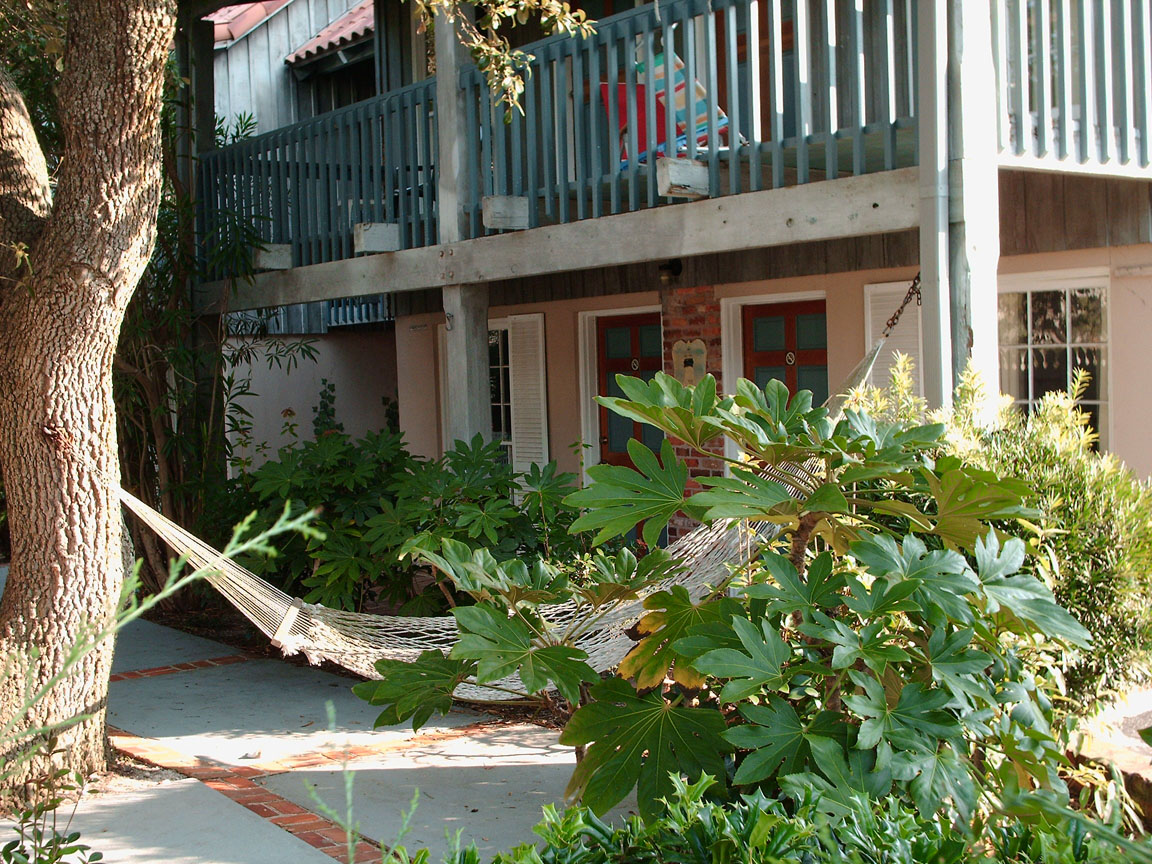
The Mariner is both pet and pocketbook friendly, especially during off season. Built sometime in the 60's, it was laid out in weathered wood, brick, and stone with care and imagination in every step. Buildings, gardens, wading pools, and dog walks wind in maze-like fashion about the grounds presenting the visitor a unique view at every turn. Our suite even had a Is it painted or is it real?small patio in the back. The motel features several outdoor swimming pools, and even a tennis court. Various authentic nautical devices adorn the grounds and buildings along with wall paintings inside and out that echo both the gardens and the nautical theme. Staff served a complimentary outdoor continental breakfast each morning in the Carolina room. A grill by the pool offered guests opportunity to socialize and cook out on a whim; it was also used for a complimentary weekly Wednesday night dinner, with guests involved in preparations as much as the staff.

Benny, Hazel, and I met people (and dogs) from as far away as Canada and New England who wintered in the Mariner - all pet owners. Some had been making the annual trek since the 1970's. Many had become friends over the years. They reminisced about floating in the heated pool, a glass of wine in hand, watching the snowflakes drift down. While we were there, the temperature was 80 degrees and gorgeous however. We didn't complain. Nonetheless, when the owner left for the day, someone always managed to sneak into the room where the pool heater resided and crank up the temperature until the pool was almost a sauna, the mist rolling off into the cooler night air. While we enjoyed walks along the beach and wading in the ocean, the air was a bit cold for swimming that time of year. At least we thought so. We had just made our way down through an ice storm that came within 20 miles of Myrtle Beach, after all. But it was wonderful to practically step outside our door and into the heated pool midnight, dawn or anytime inbetween.

pool
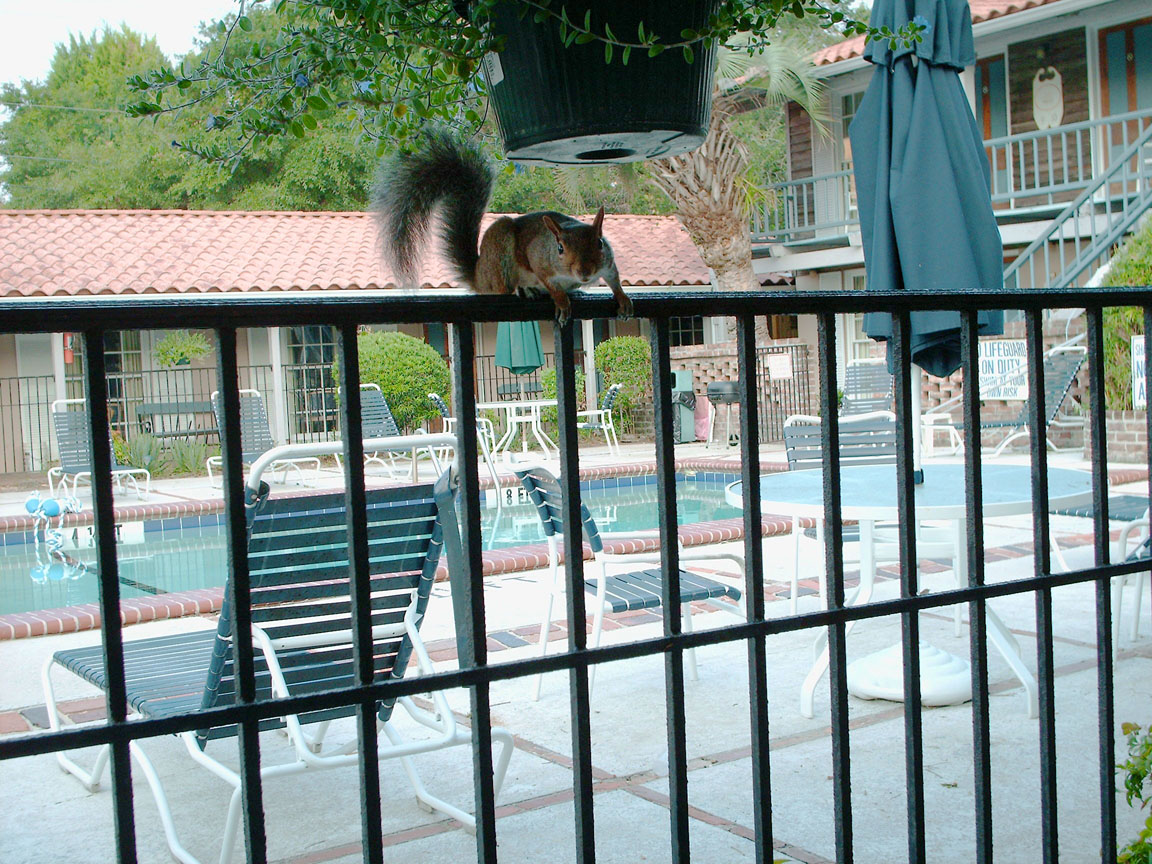
In September of 2007 when Benny and I returned to visit Bon, we chose to stay at the Mariner, even though Hazel didn't accompany us on this shorter stay. In contrast to January, September's ocean was warm and relaxing to our travel weary muscles. So was the pool. I found one late afternoon especially gratifying when the three of us swam together in the Atlantic. The swells, slightly over our heads, were gentle and buoyed us up before they broke closer to shore. Unlike my beloved blended family, I had grown up near the Ocean. It felt good watching these two people enjoy something I'd loved since childhood. By this time motel had changed hands. Breakfast was no longer being served, however the room service was excellent. We heard that the Mariner would probably not be maintained and that eventually it would be razed to make room for another high rise luxury condominium. Luxury high rises have their pleasures and conveniences (as we knew from previous visits and also from availing ourselves of the gift shop, delicious restaurants, money machine, and occasional complimentary cup of coffee at the Ocean Reef across the street). But they just don't offer the same experience, I reflected as I sat outside our door one morning, enjoying a cup of java brewed in our room, and feeding leftover crackers from our long drive down to the friendly squirrel and birds at my feet.

friendly squirrel
With that thought in mind, I decided to take pictures of everything I could - so that future generations would know that there are choices in how to live, and that things don't have to be just one way.

Remember the Mariner!


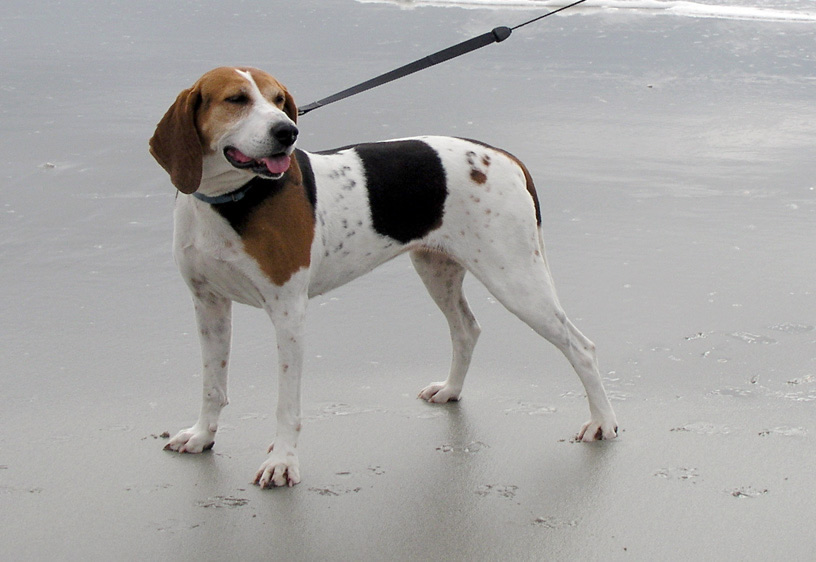
Hazelhound
this
versus this

You can browse more pix of the Mariner and the Carolinas at Jeanne's Photo Gallery

Sunday, August 12, 2007

Those Brown County Artists on eBAY

For those of you interested in Firma Phillips and other Indiana Artists of the 40's and 50's, I saw an auction a while back on ebay for a book entitled Those Brown County Artists - the ones who came, the ones who stayed, the ones who moved on, 1900-1950.

The ebay description reads:


Those Brown County Artists

Compiled by Barbara Judd

Edited by M. Joanne Nesbit

Copyright 1993

Published by Nana's Books

234 Pages

Soft Cover

BRAND NEW CONDITION

Just some of the artists written about in Those Brown County Artists:

Adam Emory Albright, Gustave Baumann, Dale Bessire, Curry Bohm, Karl Brandner, Sybil Connell, Anthony Buchta, John Bundy, Ruthven Byrum, Charles Dahlgreen, Homer Davisson, W.A. Eyden, Marie Goth, Alexis Fournier, Robert Root, Ethel Lomasney, Leota Loop, John Hafen, Glen Cooper Henshaw, Karl Martz, Paul Randall, Frederick Polley, William McKendree Snyder, Roy Trobaugh, Gaar Williams, Arnold Turtle, George Jo Mess, Frank Hohenberger, Lucie Hartrath, Carl Krafft, Kenneth Reeve, Doel Reed, Clifton Wheeler, Oscar Erickson, L.O. Griffith, Carl Graf, Georges LaChance, Paul Turner Sargent, Ada Shulz, Derk Smit, T.C. Steele, Will Vawter, E.K. Williams and many others.


The url is listed below:


Ebay Auction - Those Brown County Artists

While Aunt Firma is not mentioned in here (Technically, She's a Fountain County or Parke County Artist), she often traveled to Brown County to paint.

STOP THE PRESSES!

REPOST from 2006:

Wow! Stop the Presses, all you inquirers who want to know the worth of your painting by Firma Phillips! Wait'll You Read This!

At our first formal barn / garage / antique sale at our new location, lots of friends and neighbors stopped by. One friend from church Cathy Franz has been a patron of Aunt Firma's paintings for many years. She went to an estate sale recently where one of Aunt Firma's paintings sold for $1200!!!!!!

She was also telling me that there was a gentleman in ... Kokomo or was it Frankfurt ... who collects Aunt Firma's paintings. She is going to call to give me the contact information.

Sorry the information is so sketchy, the barn sale was hugely busy, and I didn't have time to write down all the details, but will fill them in as I get a chance.

JuneBug

How Dr. Wise Tested Rigor

When Dr. Wise did his research on rigor in chickens at Purdue University, he initially shaved his samples with a Hobart meat slicer as shown below:

He would place these samples into a small test chamber which also had several blades as shown below:
The sample was then run through a shear press similar to the one pictured below. The one below actually has a strain gauge whereas the instrument that Dr. Wise used was equipped with a proving ring that bent slightly to show resistance (as in pounds of force needed to shear the sample.)
One of the things that Dr. Wise has always wanted to finish was an article on the fate of Marilyn Monroe. He had always felt that the research he'd done for his Ph.D. could shed some light on her death and he followed the news of the time and subsequent books about it with great interest.

Dr. Wise's thoughts about the death of Marilyn Monroe


Dr. Wise's Article on the Death of Marilyn Monroe

In 1960 when Marilyn Monroe died, a young man named Raymond Wise was working on his PhD. thesis in Food Science. The particular problem he was trying to solve was how to speed up the process of rigor mortis in turkeys on their way to market. You see, it takes 24 hours for rigor mortis to resolve it self in turkeys. By comparison, It takes beef cattle 2 weeks. And it takes chickens only 4 hours. During all this time the animal must be kept in refrigerated storage, an added expense in getting food to the consumer, but an essential one for delivering meat that is tender.

One of the drugs that Dr. Wise studied in his search for a speedier way to resolve rigor in chickens was Nembutal. He discovered, however, that instead of speeding up resolution of rigor mortis, Nembutal prolonged it.

Interestingly, Nembutal at low levels is also used as a sedative for humans and was a medication that Marilyn Monroe reportedly took as a sleeping aid and the one that she reportedly died from. But was her death really suicide? Or was it something else?

Since earning his PhD., Dr. Raymond Wise has been a researcher, a farmer, and a business man for the past 50 years. He actually developed the powdered egg formula that NASA’s astronauts ate on their trip to the moon. Over the years he has consulted with major corporations in the food industry on a variety of problems, ranging from the crispness of 40% bran flakes and soda crackers to the tenderness of pork and beans. His list of clients included Kellogg, Swift, Eli Lilly, and many others. Now retired he writes about something that has been on his mind for many years, some information from his thesis that might help to more accurately pinpoint the time of death of Marilyn Monroe.


Some Reflections on the Death of Marilyn Monroe
by Raymond Wise, Ph.D., Purdue University
1960

Rigor Mortis occurs when striated muscle fibers are shortened by expenditure of energy in the form of ATP. Huxley (1958) reports shortening of the fibers, increasing in density. Wise (1960) found that Nembutal (Pentobarbital Sodium) lengthens the duration of rigor of muscles by 40% as evidenced by shear resistance of muscle when shear-tested. Resolution occurs when all the ATP are used up and tense muscle fibers relax.

Nembutal lengthens the resolution phase. The Wise study (1960) concluded that the Nembutal prolongs rigor duration and resolution several hours when compared to no use of Nembutal in control animals. While the Wise study used chicken muscle, and the Huxley study used rabbit muscle, these would be similar, and also have application to humans.
According to the Merck index, Nembutal is used in low dosage as a sedative, but is lethal in doses of 2 to 20 g. Marilyn Monroe’s death, however, was not due to ingestion of Nembutal pills but to a lethal injection in an internal site which may have been overlooked at her autopsy. This would account for the lack of external injection marks on her body.
Death comes when all the energy in dying tissue is exhausted. It occurs in the liver last, which accounts for the temperature of the liver in a pan during the autopsy of Marilyn Monroe being relatively high in a cool morgue on Sunday. The last part of the body to die when all ATP are used is the liver.
The bruises on Marilyn Monroe’s posterior indicate that she was probably alive when the ambulance driver James Hall accidentally dropped her while he was loading her into the ambulance at approximately 3:30 a.m.
Corpses do not bruise.

I believe my research on Rigor supports the evidence that Marilyn Monroe died later than was originally claimed by Dr. Engelberg when he initially pronounced her dead to Officer Clemmons shortly after 12:30a (p. 123, Marilyn Files). I believe that she died at 3:30 am or later. I believe Mrilyn Monroe was murdered for whatever reasons.

There was obviously a cover up that included many people. I won’t name all of the people involved, but two significant ones are:
  • The housekeeper, Mrs. Murray, who recanted her story in 1985 and
    said RFK was at Marilyn Monroe’s the evening before she died and that
    she had lied to provide an alibi for him and
  • JFK, the President of the United States.

Raymond G. Wise, Ph.D.
Bibliography
Huxley, H.E. (1958). Contraction of Muscle, Scientific
American
, (November Issue).
Merck Index, 7th Edition.

Nuland, Sherwin B. (1995). How We Die. Vintage Press.

Slatzer, Robert (1992). Marilyn Files. SPI Books.

Wise, Raymond G., Ph.D. (1960). Some Factors Affecting Poultry
Meat
(including a chapter on the effects of Nembutal on the duration
and resolution of rigor mortis). Thesis at Purdue University.








Thursday, July 26, 2007

Introducing Ray and Peggy Wise

For many years, Benny and I have had the privilege to have some good neighbors, among them Ray and Peggie Wise. They operated AquaWise well into their seventies, and had a feed store along with their water softening business . Originally from around Peru, Indiana, Ray fought in World War II, and then went to Purdue on the G.I. Bill. He earned his Ph.D. in Food Science from Purdue University in 1960 and subsequently did consulting and research for many major companies, often at his little farm outside of Lafayette with the help of his able and capable wife Peggie and their three children. He was a power-house and pursued many different interests, as well as farming and operating his own business in the course of providing for and caring for his family. One of his major accomplishments in his field was developing the powdered egg formula that the astronauts ate on their trip to the moon.

Although we had occasional interaction with Ray and Peggie at their store and in conjunction with Benny's refinishing, we actually got to know them better in later years. Benny especially struck up a close friendship with Ray and Peggie when he took them to the 2001 Farm Progress Show just down our road from our houses after Ray was recovering from open heart surgery and was unable get about without assistance. Benny and another friend of ours, Larry Giroux, also mowed the Wise's yard after Ray had that surgery, as good neighbors often do.

Ray and Peggie were friendly, kind, intelligent, and interesting people. They were members of the First Christian Church in Lafayette for most of their married lives. Although a disciplined, empirical scientist, Ray has lived comfortably with both his science and his faith. He is even somewhat of a mystic. Ray has given Benny and me some really fun and nice things to sell at antique shows and in our booth at Antique malls. Many items were primitives. One in particular was a bob sled he had made as a boy with a steering wheel from an old Model T Ford. More recently he contributed an old unicycle to our garage sale.

Peggie Wise passed away in late winter / early spring of 2006 after a long bout with Alzheimers and diabetes. When she had to move to a nursing home because of her medical condition, Ray faithfully went to sit with her every day. Married almost 60 years, he has been lost without her.

One of the things that Ray has always wanted to finish was an article on the fate of Marilyn Monroe. He had always felt that the research he'd done for his Ph.D. could shed some light on her death and he followed the news of the time and subsequent books about it with great interest.

He has been kind enough to allow me to post his observations on this blog, so stay tuned ... :)

Saturday, July 21, 2007

From another of Aunt Firma's Patrons

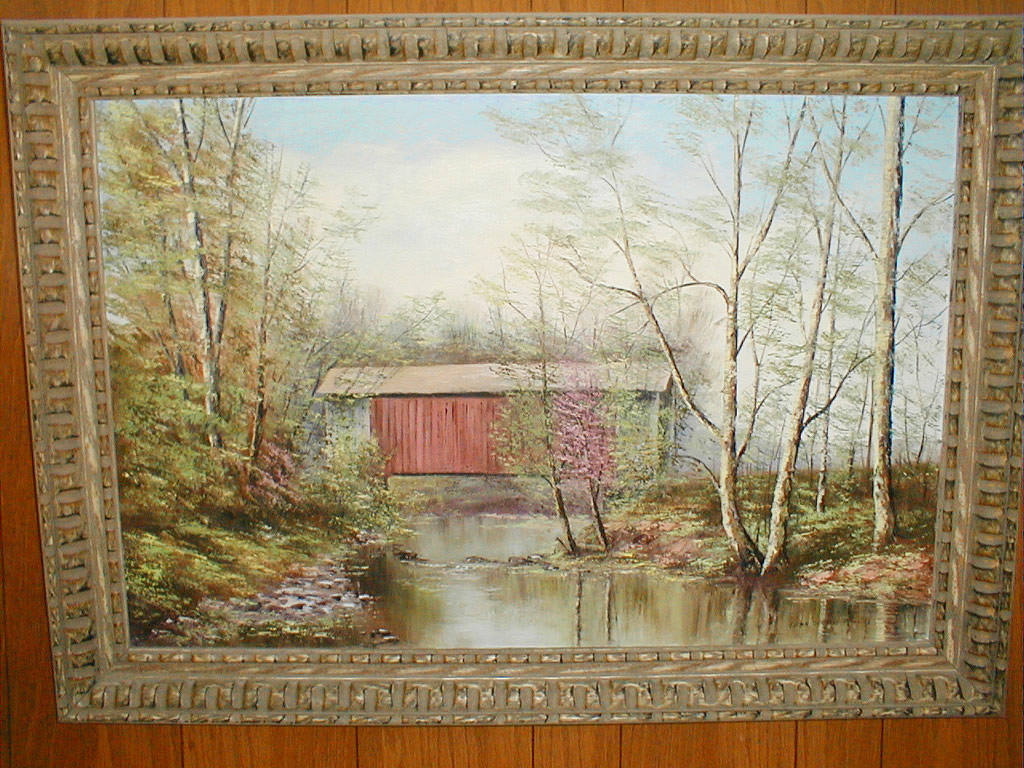
Thanks to Robert Shaw for this photo of a 36 x 24 inch painting of a
short covered bridge that he and his family purchased at a church garage
sale several years ago. He says that it hangs in their family room and
that they enjoy it very much.
Thanks, Robert, for this lovely sample of Aunt Firma's work!
Sincerely,
JuneBug


How much is your painting worth?

A few years ago I received an email from Morris Robinson with an oft asked question:


Hello Jeanne:

I would like to have an idea of the value of a fall scene that I purchased from Firma in the summer of 1973. The oil painting is about 30 inches wide and 24 inches high. I don't intend to sell it. Rather, I intend to contribute it to my law firm.

Allow me to share an anecdote. When I purchased the painting, I gave Ms. Phillips a check drawn on a Boston bank. She accepted it. I couldn't help asking her, "How do you know that I am who I say I am and that my check is good?" I never forgot her response. "You didn't come all the way to Turkey Run, Indiana to pass off a bad check. Anyway, I can always paint another painting!" I have told the story many times. The check, incidentally, was good.

Best wishes.

Morris Robinson

I asked the family and got the following answer from cousin Dorinda that many might find helpful:

There are several questions that I need to ask ...

1. I would imagine that is in excellent condition, if not, then that would devalue the painting.
2. What type of frame is it in?? If the painting is in an ornate frame then the package is worth more than if it is in a plainer frame.
3. I have found that some subjects she painted are worth more than other subjects ( less known subjects i.e. a painting of Turkey Run Bridge is more memorable to collectors than an obscure barn).
4. Just going by size and subject matter, One sold last year on Ebay for $175.00 and another was over $200.00 approximately the same size.

Hopefully, this information helps you.

Dorinda

Also thanks to Dorinda for the following suggestion:

If you set up an automatic search on ebay for Indiana Artists, pay particular attention to paintings that may show up from Brown County artists from the 1940's, 50's, 60's, and 70's, to see what they look like and how they are priced. Aunt Firma used to go to Brown County to paint, and she may well have painted with, or at least met some of these people. The styles seem very similar.

Other relevant localities include Parke County and Fountain County - I believe Aunt Firma helped influence many of those artists. For instance the two Parke County artists listed below mention on the Parke County Covered Bridge Art Association web site that they studied under Aunt Firma - and I'm sure many others have also studied with her through the years.

Mary Harrison
Louise Michael


From one of Aunt Firma's Patrons

I'm taking the liberty to share this email and lovely photograph of Aunt Firma's work from Bill Morgan received some time back - thanks so for sharing this, Bill, the pic is gorgeous!

Jeanne:

I found you through a search for Firma Phillips on the web. Love your website, as I come from a family of maniacal amateur photographers, and, alas, have the bug myself.

Our mother passed away last Wednesday at age 88. We are sad, but she was ready to go, and said so outloud to several of us in the last few months. While her health was not the best, she was reasonably O.K. and active to the end. She took a fall on Wednesday morning, the first sign of anything wrong, and was gone by 2 the same afternoon. This was how she wanted to go.

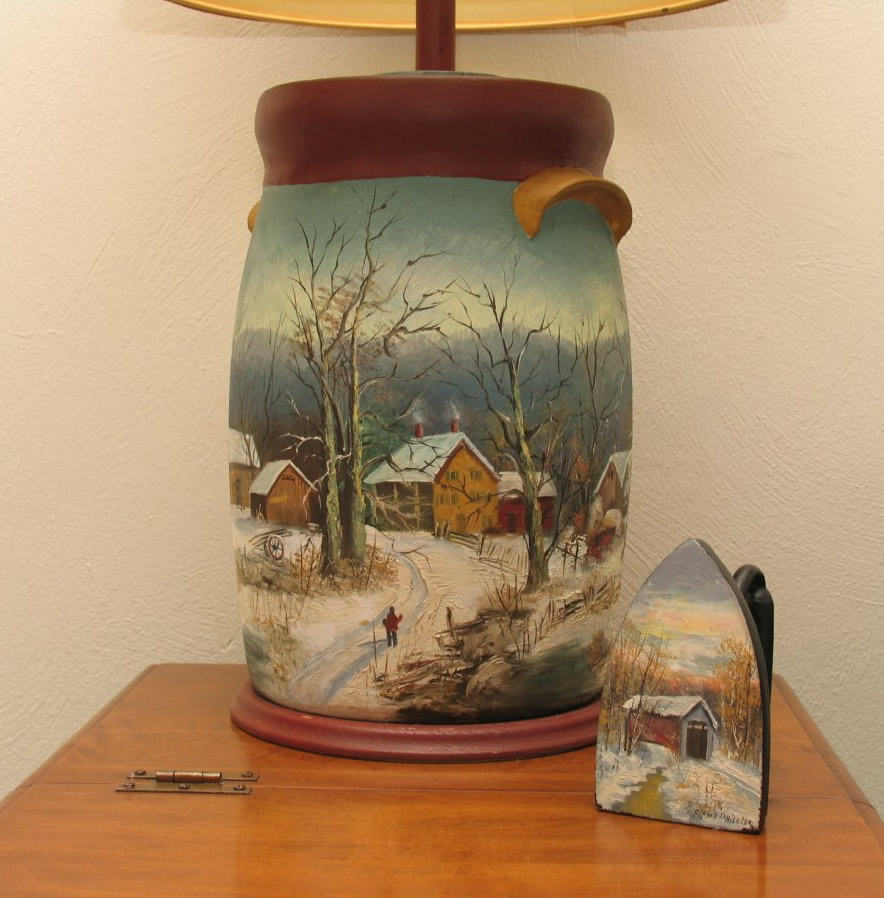
We're now in the throes of deciding what to do with her things. Amongst the treasures are 2 works by your aunt that my brother bought for our parents. We will probably keep them in the family, but want to establish value for insurance purposes. We wonder if you might know who to contact who might know the value of her work these days. One work is painted on an old cast-iron flat iron, a winter scene of a covered bridge. It is signed, but not dated. The second is a large crockery butter churn, with winter scenes of houses and barns painted over the entire surface. The pottery lid is also fully painted. It is signed and dated 1972. My father drilled a small hole in the bottom and converted it to a table lamp, but we have the original wooden churn plunger if someone preferred to have it look like a churn again.

I do not have digital photos at the moment, but will send some if it would help evaluate the works, or if you would just like to see them. Thank you in advance for any information you can provide.
I'll be sending a link to your "Weddings and Funerals" story to my sibs - I think it would be a good read for them right now. It was for me.

-- Bill Morgan
Morgan Roemmel Design, LLC
Muncie, Indiana


Cousin Lowell on the topic of Firma

Firma did graduate from Kingman. I think she always had the talent to draw and paint but utilized it after Glen passed away(1962). Probably a financial necessity. I know that she was in the group of artist that started the Rockville Bridge Festival.

She studied painting at Wabash College after she had been painting for a while. She had a studio at Sugar Creek village by Turkey Run and previous to that one at Grange Corner just south of the old Grange Corner store and of course in both of her residences.

My sister Marie stayed with Glen and Firma while she studied nursing during much of World War 2. That was in Paris,Illinois. Marie would have not been able to afford nursing training without the generosity of Firma and was always grateful to Firma.

I would imagine that most of the artist that were of her era have passed on now ... contact the Covered Bridge Association for more information.

Sad that I know so little about a person I liked and admired.

Lowell

Addendum: When I said that Firma studied Painting at Wabash College ,I should have said she was tutored by an art professor from Wabash College. I think this was when she learned to paint with a knife. Barbara said that Firma had painted a picture of the instructor.

More History on Firma

This information about Firma came from my cousin Richard a few years ago ...

My wife, Marie L. Alward, her niece, was the sole heir to her estate when she died. Marie lived with "Aunt Firma" in Paris, Ill for a year before going to nursing school there and saw her frequently during that 3 year period.

Firma was the first in her family to graduate from high school which was in Kingman. Indiana. She was one of five girls and three boys. Her father was born in France and came to the US when he was ten. As an adult he was a coal miner and moved about Indiana where there were mines. Most of Firma's growing up years were in Fountain and Parke County. Living in small rural areas they experienced a great deal of prejudice, even to having a cross burned in their yard (KKK) because the community considered them foreigners and catholic . It was necessary for Firma to work to earn money to go to HS.

Artist Firma Duchene Phillips

Hi, everyone, I and my family would like to thank all of you who have
come across my story about my Great Aunt Firma Duchene Phillips
and have contacted us to let us know you have one of her paintings or to
share a memory of her or were just wondering about the current value of
some of her works. We have really enjoyed hearing from all of you and
seeing all the lovely pictures you have sent.

I am posting on this topic on my blog site for those who are
interested in Aunt Firma and her art work so that people can not only
share with us but with one another. I'll be happy to put any pictures
that you want to share of her works on the web so that you can link to
them - just email me.

I do watch for her paintings on ebay and will try to post a notice
here when someone puts up one of her paintings for auction. It has
happened a few times. It's funny - even though Benny and I have dabbled
in the antique and refinishing business for several years, I haven't
come across any of her paintings myself in antique stores or malls or
flea markets - hopefully that means people must be hanging on to them.

Thanks again and hope to hear from you!

JuneBug, Co-Proprietor of Second Looks Antiques and Refinishing


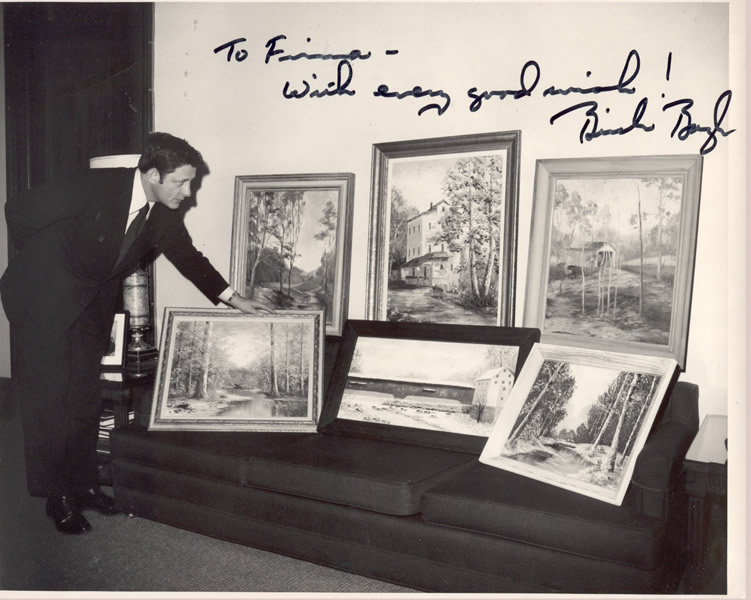
Senator Birch Bayh with one of Aunt Firma's Paintings (and several other artists'